About testo 300 kit 1 - Flue gas analyzer
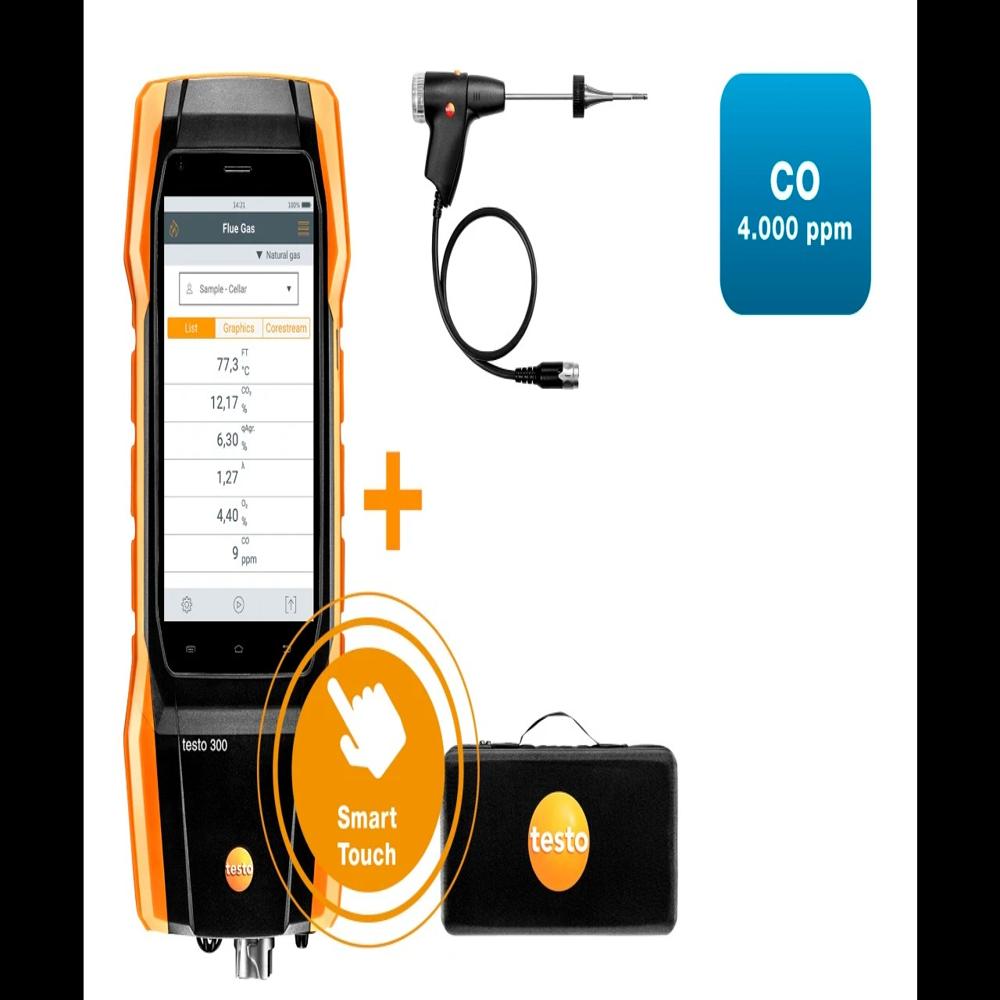
With this kit, you will be equipped for the most important measurements involving heating systems: the TV-tested testo 300 flue gas analyzer is supplied with O2 and CO sensor up to 4,000 ppm, basic flue gas probe, instrument case and practical accessories.
Your advantages
-
Fast and easy to operate: intuitive measurement menus and fast-response Smart-Touch display
-
Including O2 and CO sensor up to 4,000 ppm
-
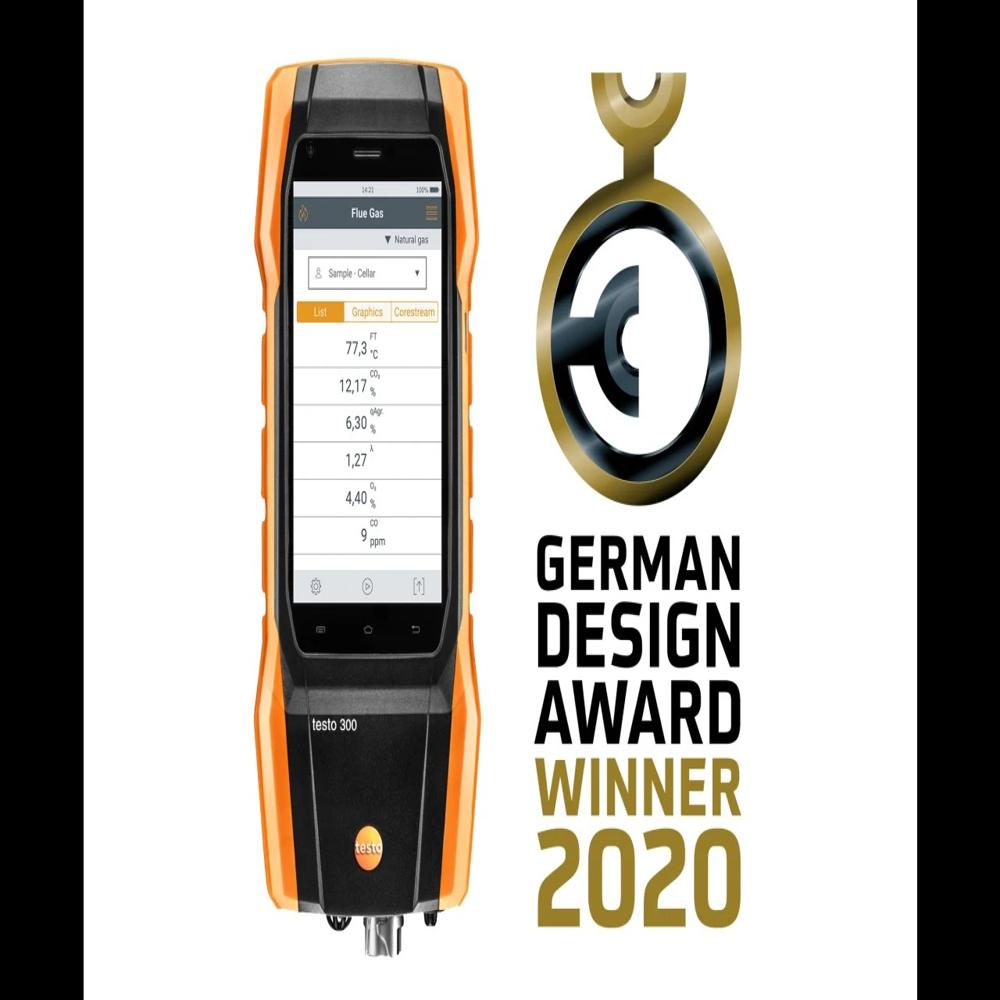
Large 5-inch HD display see all the system's measuring values at a glance
-
In the kit: testo 300 flue gas analyzer, including O2 and CO sensor up to 4,000 ppm, mains unit, basic flue gas probe, spare dirt filters, EasyHeat software, instrument case
Cutting-Edge Sensor TechnologyThe testo 300 Kit 1 is equipped with long-life sensors for O2 and CO measurement (expandable with an optional NO sensor) for reliable, accurate combustion analysis. Quick sensor warm-up and precise readings ensure minimal downtime, supporting efficient testing for multiple applications in heating systems, burners, and boilers.
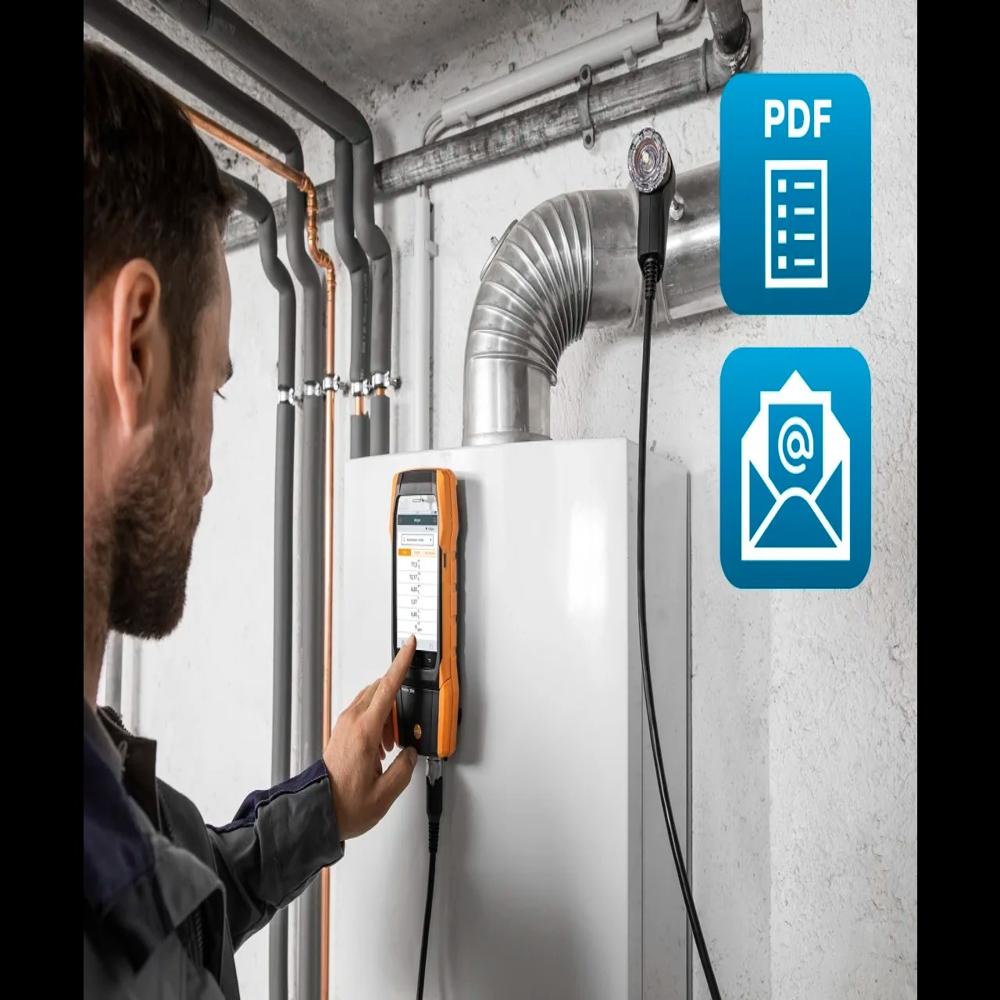
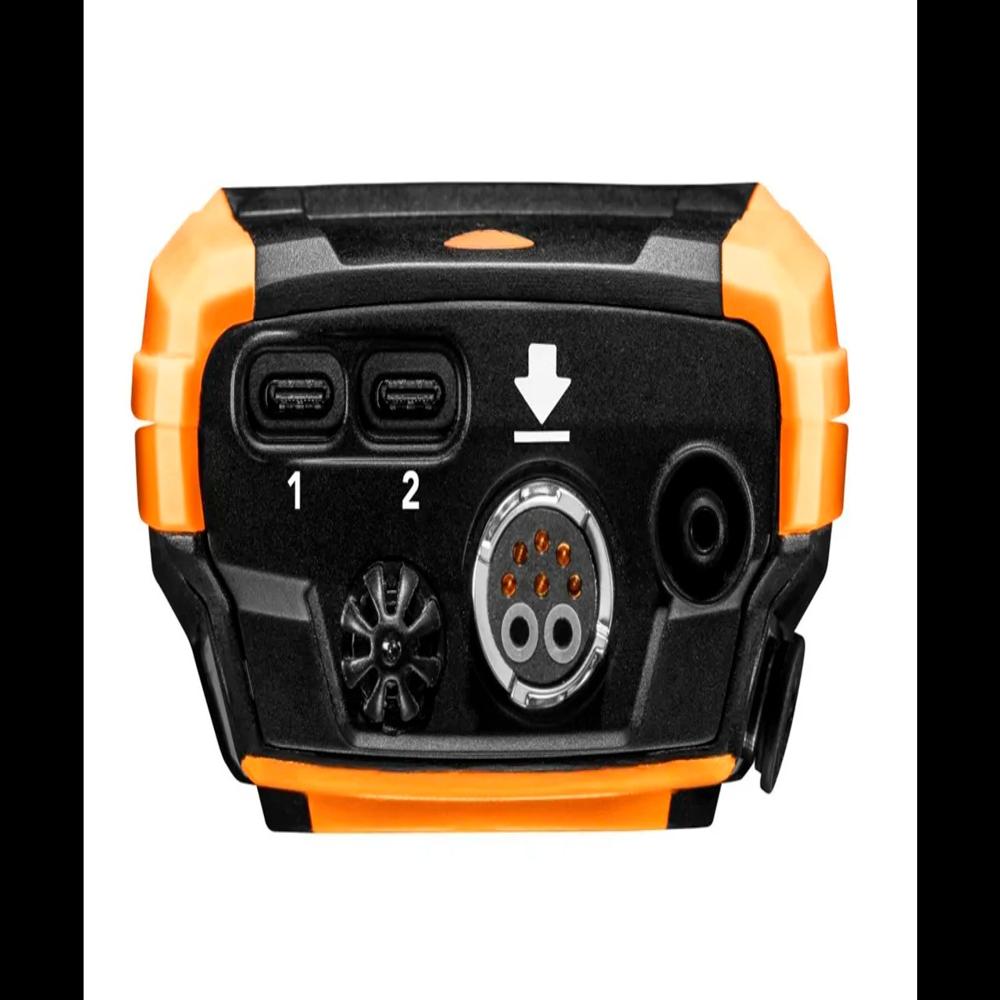
Smart Data ManagementFeaturing onboard storage for up to 500 test protocols, the analyzer streamlines documentation. PDF and CSV report output via email or the dedicated app simplifies sharing, archiving, and integration into digital workflows. USB, Bluetooth, and WiFi interfaces add flexibility for various device connections, enhancing productivity.
Ergonomic, Portable DesignWeighing just 500 grams and measuring 222 x 81 x 46 mm, the testo 300 is easy to handle and transport. Its robust build and IP42 protection rating withstand field conditions, while the 5" color touchscreen provides intuitive, user-friendly operation. The rechargeable battery delivers up to 10 hours of continuous analysis.
FAQ's of testo 300 kit 1 - Flue gas analyzer:
Q: How does the testo 300 Kit 1 record and share measurement data?
A: The testo 300 Kit 1 stores up to 500 test protocols in its internal memory. You can export reports in PDF or CSV format via email or app using WiFi or Bluetooth connectivity, and also through a USB connection for easy integration into your workflow.
Q: What benefits do the long-life sensors offer for O2 and CO analysis?
A: Long-life sensors in the testo 300 Kit 1 provide greater durability and reliability during O2 and CO measurements. They reduce maintenance frequency and improve operational uptime, making them a cost-effective solution for regular emissions testing.
Q: When should I use the optional NO sensor with this analyzer?
A: The optional NO sensor should be used when monitoring nitrogen oxide emissions is required, such as in specific regulatory or environmental compliance situations. Adding this sensor extends the analyzer's capabilities to cover a broader range of emission parameters.
Q: Where is the testo 300 Kit 1 typically applied?
A: This analyzer is primarily used in environments involving heating systems, burners, and boilers. Its portable design and robust build make it suitable for professionals conducting emissions and combustion analysis in residential, commercial, or industrial settings.
Q: What is the process for operating the testo 300 Kit 1 after turning it on?
A: After switching on the unit, the testo 300 warms up in approximately 30 seconds. You can then use the touchscreen to select manual or automatic measurement functions, attach the appropriate probes, and begin recording data instantly. Results and reports can be generated directly on the device.
Q: How does the device ensure accurate readings during use?
A: With high-resolution sensors and rapid response times (O2: <30 sec, CO: <60 sec), plus a modular probe system, the testo 300 Kit 1 ensures accurate and repeatable measurements. Its performance is supported by a robust touchscreen interface and reliable data management features.
Q: What advantages does handheld, semi-automatic operation provide for users?
A: Handheld, semi-automatic operation allows users to flexibly conduct analyses on-site, adjust control modes as needed, and benefit from ease of use with touchscreen navigation. This reduces analysis time and increases efficiency in fieldwork compared to fully manual instruments.




 Send Inquiry


 Send Inquiry